Physical Address
304 North Cardinal St.
Dorchester Center, MA 02124
Physical Address
304 North Cardinal St.
Dorchester Center, MA 02124
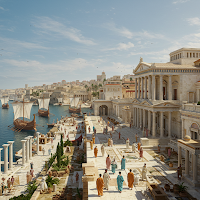
Visualize a place in a vibrant, internationally diverse setting, right on the Mediterranean shores of Egypt. This was not just a site built by brick and mortar but by ideas, dreams, and the shared knowledge of our world. This was a site which would possess significance even when compared to more ubiquitous sites, being much more than a library, an institution, a monument to humanity’s unquenchable thirst for knowledge. Yes, we are talking about the Great Library of Alexandria, a name that has survived against the backdrop of millennia breathtaking intellectual value mixed with unimaginable loss. But what was this treasure really like? What happened to the scrolls that held, what we might bear to know, remnants of time? So let us situate this moment and add combine from the echo, the still waiting return of memories past.
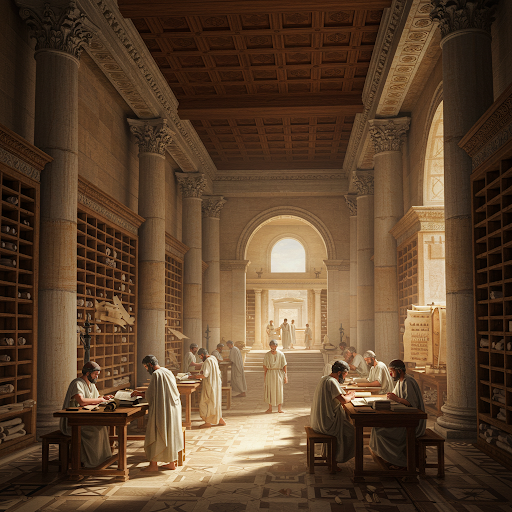
After his death, Alexander the Great, his heir Ptolemy I Soter, and his son Ptolemy II Philadelphus wanted, eventually, Alexandria to be the intellectual and cultural center of the Hellenistic world. To accomplish their vision, they constructed the Mouseion—which means “Temple of the Muses”—along with the Great Library which served as a sort of central library and the research library of the Mouseion. The Ptolemies envisioned one day having every great scroll from every culture and language, and they wished to build towards the totality of books. To reach this ambitious objective, the Ptolemies poured vast resources and supported the development of the first ‘ecosystem’ in history of scholars, poets, scientists, and philosophers to think, research, write, and debate. They built what was the world’s first full-fledged ‘think tank’ with housing, food, and stipends for each of the scholars to live together and think, research, and debate.
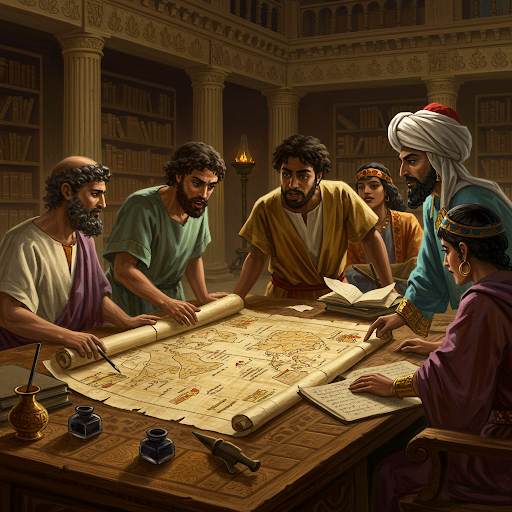
Although it is impossible to know exactly how many texts the Library contained, ancient authors said it contained more than 40,000, maybe more than 700,000 papyrus scrolls. And, like all learning by humans today, the Library was the result of the vigorous pursuit of knowledge by scouring book markets on every corner of the Mediterranean, acquiring books and scrolls by piracy, providing copying services and writing books, or in some cases, commissioning written translations like the Septuagint. The goal of the Library was to have every work of Greek literature, philosophy, and literary works from Egypt, Persia, and India, and beyond, as long as it had been translated into Greek. This massive endeavor to acquire, curate, translate, and preserve is effectively the totality of all human comprehension and investigation, recorded for study and compilation. The Library represents an astounding amount of effort in acquisition, curation, translation, and preserve.
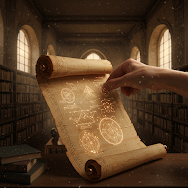
Callimachus, a renowned poet and scholar, is thought to have created the Pinakes, arguably the world’s first comprehensive library catalog, listing works by author and category, a monumental task of bibliography.
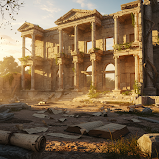
A Symbol of Universal Knowledge: It expresses a utopian vision of the possibility of collecting all the knowledge of humankind in one location, a 21st-century dream echoed in ambitious projects like the internet and the new realm of digital archiving.